Mara Richter · 12 October 2026
The Impact of API Connectivity on Workflow Automation in Digital Note Platforms
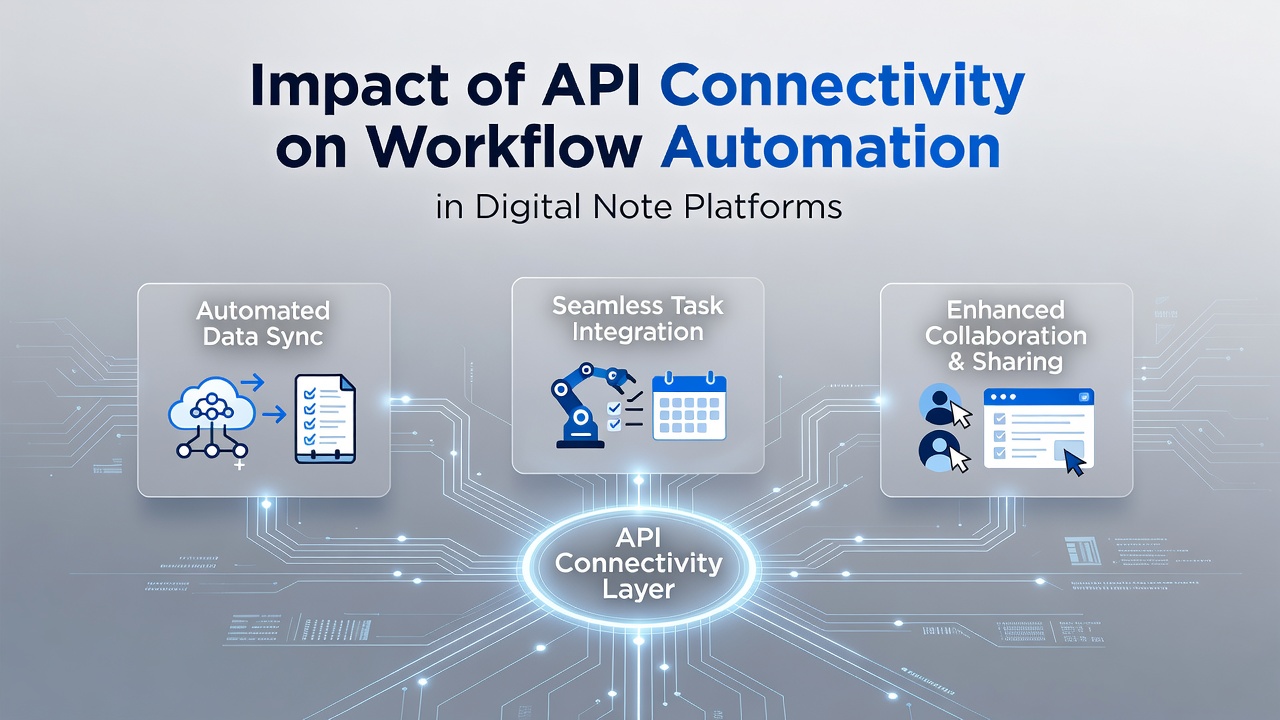
Digital note platforms have expanded their capabilities through API connectivity, which allows seamless data exchange between note-taking applications and external services such as task managers, calendar systems, and analytics tools. Researchers have documented how these connections reduce manual data entry while supporting automated processes that handle routine updates across multiple environments.
Core Mechanisms of API Integration
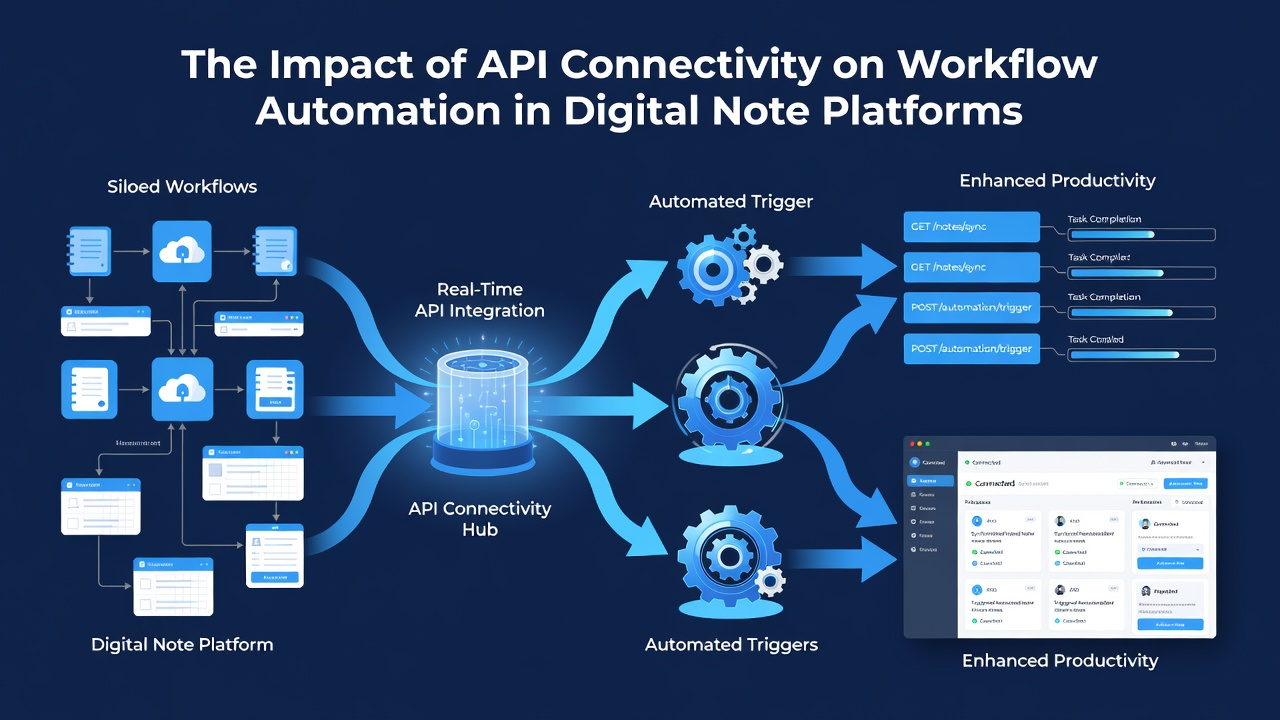
API endpoints in platforms like Notion, Evernote, and Obsidian enable developers to build custom scripts that pull notes into project management software or push reminders based on tagged content. Data indicates that organizations using these integrations report faster synchronization times, with transfers occurring in seconds rather than requiring separate uploads. Studies from academic institutions show that structured API calls maintain data integrity across systems, while authentication protocols such as OAuth 2.0 limit unauthorized access during transfers.
Those who implement webhook triggers find that changes in one note automatically update linked records elsewhere, creating continuous loops that eliminate duplicate work. In October 2026, several providers released updated API documentation that added support for real-time collaboration feeds, allowing teams to monitor edits without refreshing multiple dashboards.
Workflow Automation Outcomes
Automation through APIs transforms isolated note collections into dynamic components of larger business processes. For instance, a research team at a European university integrated note platform APIs with laboratory information management systems, resulting in automatic population of experiment logs from handwritten observations captured on mobile devices. Figures from industry reports reveal that such setups cut administrative time by measurable margins, particularly in fields requiring frequent documentation updates.
Observers note that conditional logic within API workflows routes specific note content to different departments based on keywords or metadata. This routing happens without human intervention once the initial rules are set, which keeps information flowing while teams focus on analysis rather than filing. What's interesting is how these connections scale across global teams, where time zone differences no longer delay the transfer of critical updates between regions.
Security and Compliance Considerations
API connectivity introduces requirements for encryption and access controls that align with standards from regulatory bodies across regions. The European Commission data governance framework outlines expectations for handling personal information during automated exchanges, and platforms that meet these guidelines demonstrate lower incident rates according to compliance audits. In parallel, Canadian research on digital records emphasizes audit trails that APIs generate automatically, tracking every data movement for accountability purposes.
Those who manage enterprise deployments often combine API keys with role-based permissions to restrict which external applications can read or write note content. This layered approach prevents overexposure while still allowing the flexibility needed for cross-tool automation. Evidence suggests that regular key rotation and endpoint monitoring further reduce risks associated with prolonged connections.
Adoption Patterns and Measured Results
Surveys conducted by research organizations indicate rising adoption of API-driven automation among mid-sized companies since 2024. One case involved a consulting firm that linked its note platform to customer relationship software, enabling automatic creation of follow-up tasks from meeting notes. The process now runs daily without additional staff input, freeing analysts for client-facing work.
Another example comes from an Australian academic project where API connections between note repositories and citation managers streamlined literature reviews. Researchers found that exported references appeared in bibliographies within minutes of annotation, replacing hours of manual formatting. These patterns appear consistently across sectors where documentation volume is high.
Conclusion
API connectivity continues to reshape how digital note platforms support automated workflows by enabling precise, rule-based exchanges with external systems. Data from multiple regions shows consistent gains in speed and accuracy when integrations follow established security practices. As platforms refine their endpoints through 2026 and beyond, the range of possible automations expands without requiring users to abandon familiar note interfaces.