Kai Werner · 23 November 2026
Shared Workspaces Evolve to Connect Tasks Files and Updates for Distributed Teams
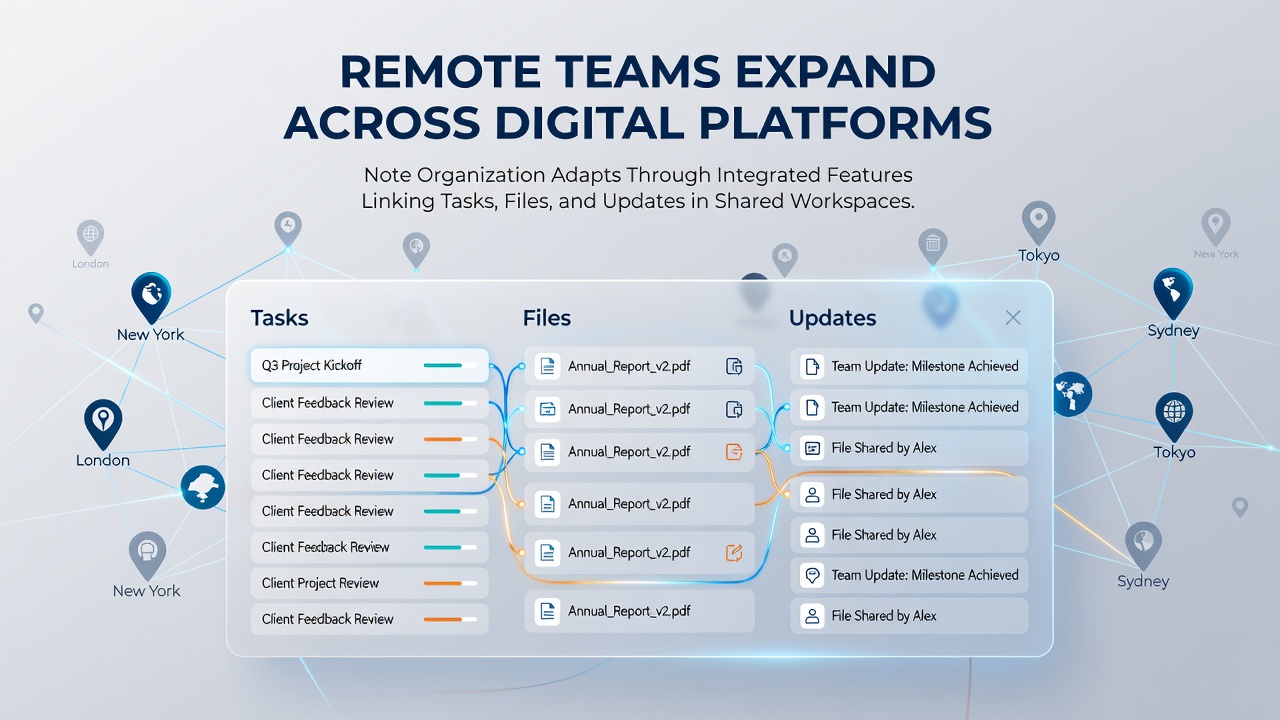
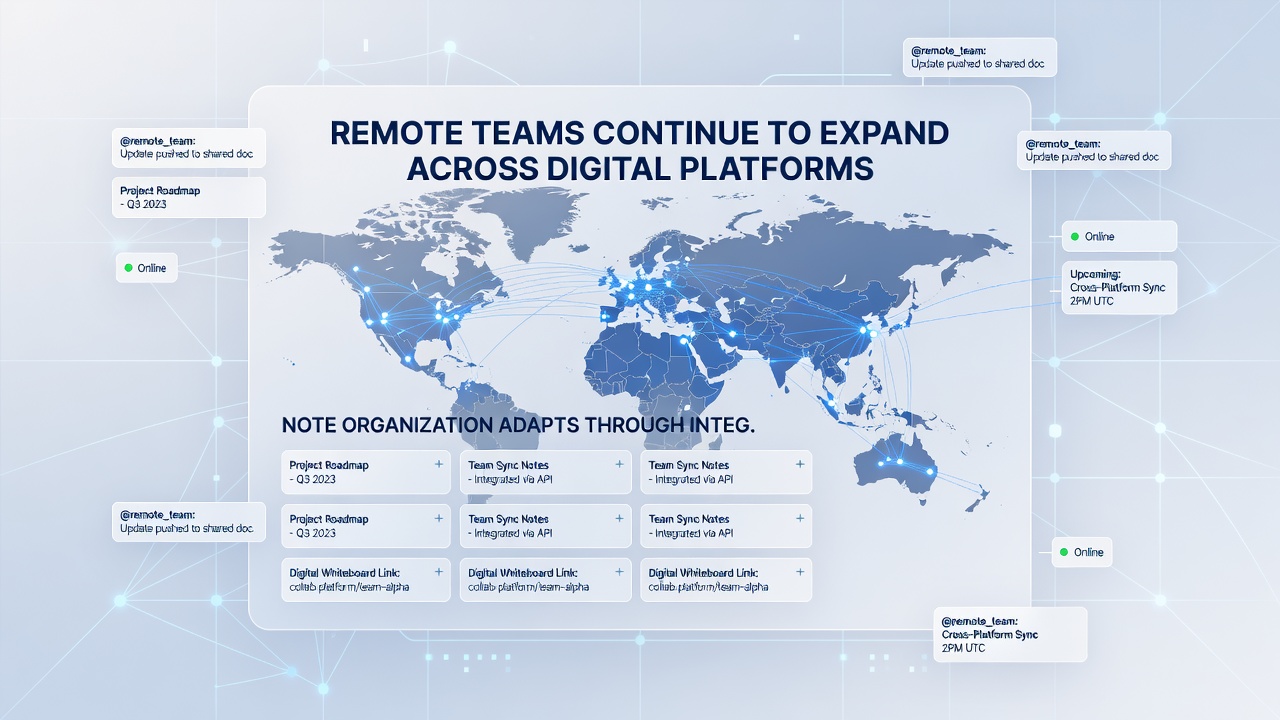
Remote teams continue to expand across digital platforms and note organization adapts through integrated features that link tasks files and updates in shared workspaces. Data from labor statistics agencies show the number of fully distributed employees rose steadily between 2023 and 2025 with projections indicating further growth through late 2026. Organizations respond by layering project management tools directly into note platforms so that a single workspace displays assigned tasks alongside related documents and live status changes.
Integration Patterns Across Platforms
Developers build connectors that pull task lists from external systems into the same view where teams store meeting notes and reference files. When a status update occurs the change appears instantly in the shared workspace and triggers notifications tied to specific sections of a document. Researchers at European institutions documented how these linkages reduce the number of separate applications employees open during a typical workday. One study released in 2025 examined 200 mid-sized firms and found average tool switching dropped by 18 percent after integrations were activated.
Real-Time Synchronization Mechanisms
Shared workspaces rely on event-driven architectures that push updates across devices without requiring manual refresh commands. File versions remain synchronized because the system records every edit alongside the task it supports. Observers note that Australian Bureau of Statistics reports from 2025 highlighted increased adoption of such synchronized environments among knowledge workers in the technology and professional services sectors. The same data set revealed that firms using unified workspaces reported shorter project cycle times compared with those maintaining separate note and task applications.
Case Examples from Industry Deployments
Take one software company that embedded task tracking inside its note platform during the second quarter of 2025. Team members could create a new task directly from a paragraph in a planning document and assign it to a colleague whose availability appeared in the same pane. Updates to that task then surfaced as inline comments attached to the original note section. Another organization in the consulting field linked reference files to recurring project updates so that policy documents automatically appeared when quarterly review notes were opened. These setups illustrate how note organization adapts when remote teams continue to expand across digital platforms.
Security and Access Controls
Access permissions travel with each linked element so that viewing rights for a file remain consistent whether the user arrives through a task card or through a note mention. Audit logs capture who opened which document or changed a task status and these records integrate with corporate compliance systems. Government agencies in Canada released guidance in 2025 that encouraged organizations to maintain unified audit trails across connected workspace components. Implementation teams report that centralizing permissions in this manner simplifies compliance reviews scheduled for November 2026.
Scalability Considerations
As team size grows the workspace architecture must accommodate additional users without degrading update latency. Platform providers address this requirement by distributing data across regional servers and caching frequently accessed note sections locally. Figures released by Statistics Canada in early 2026 indicated that companies operating distributed teams of more than 150 people experienced measurable performance gains after migrating to platforms with built-in geographic caching. The same report noted continued reliance on integrated task and file features as headcount expanded.
Training and Adoption Trends
Internal rollout programs often begin with small pilot groups that test linkages between notes tasks and files before wider deployment. Training materials focus on how to reference a task inside a note and how to attach supporting files so that context remains visible to all participants. Data collected by academic researchers in the United Kingdom during 2025 showed that teams receiving structured onboarding adopted integrated features at higher rates than those given only documentation. Continued expansion of remote teams through November 2026 is expected to sustain demand for these training resources.
Conclusion
Remote teams continue to expand across digital platforms and note organization adapts through integrated features that link tasks files and updates in shared workspaces. Evidence from multiple government statistical agencies adn research institutions demonstrates measurable reductions in tool switching and project cycle times when these linkages are active. Organizations preparing for workforce changes in late 2026 continue to refine permission models synchronization methods and training approaches to support larger distributed groups. The pattern of connecting discrete work elements inside unified environments shows no sign of reversal based on current adoption data.