
Cameron Schmidt · 14 September 2026
Navigating Post-Migration Traffic Recovery in Note-Taking SaaS Platforms
Domain migrations in note-taking SaaS platforms often trigger sudden drops in organic visibility because search engines re-evaluate new URLs while users adjust to altered navigation paths, and recovery hinges on coordinated technical and content adjustments that restore indexing signals over weeks or months. Observers note that platforms handling millions of notes must address both crawler access and user retention simultaneously since lost rankings compound when returning visitors encounter broken links or outdated sitemaps.
Core Causes of Traffic Decline After Migration
Search engine algorithms treat domain changes as potential site moves that require explicit confirmation through tools such as Google Search Console and Bing Webmaster Tools, yet incomplete verification leaves pages temporarily de-indexed while canonical tags point to old addresses. Data shows that note-taking services frequently overlook redirect chains during server transfers, which dilutes link equity and extends recovery timelines beyond initial projections. Researchers discovered that content freshness signals weaken when note synchronization features receive updates that search bots interpret as low-value duplication across mirrored subdomains.
Technical Steps That Restore Crawler Access
Teams begin by submitting updated sitemaps that list every note template and shared workspace URL, then monitor crawl statistics to confirm that previously indexed pages regain attention within the first thirty days. Proper implementation of hreflang attributes becomes essential for platforms serving multilingual users because note-taking applications often store content in multiple languages that must map correctly after relocation. Experts have observed that enabling HTTP/2 and optimizing server response headers reduces latency that otherwise discourages repeated crawls during the stabilization period.
But here's the thing: even flawless redirects fail to recover traffic if internal linking structures remain fragmented, which forces platforms to audit every shared note permalink and update references stored in user-generated templates. Studies indicate that platforms completing these audits within fourteen days after migration see indexing rates rebound faster than those delaying the process.
Analytics and Monitoring Practices
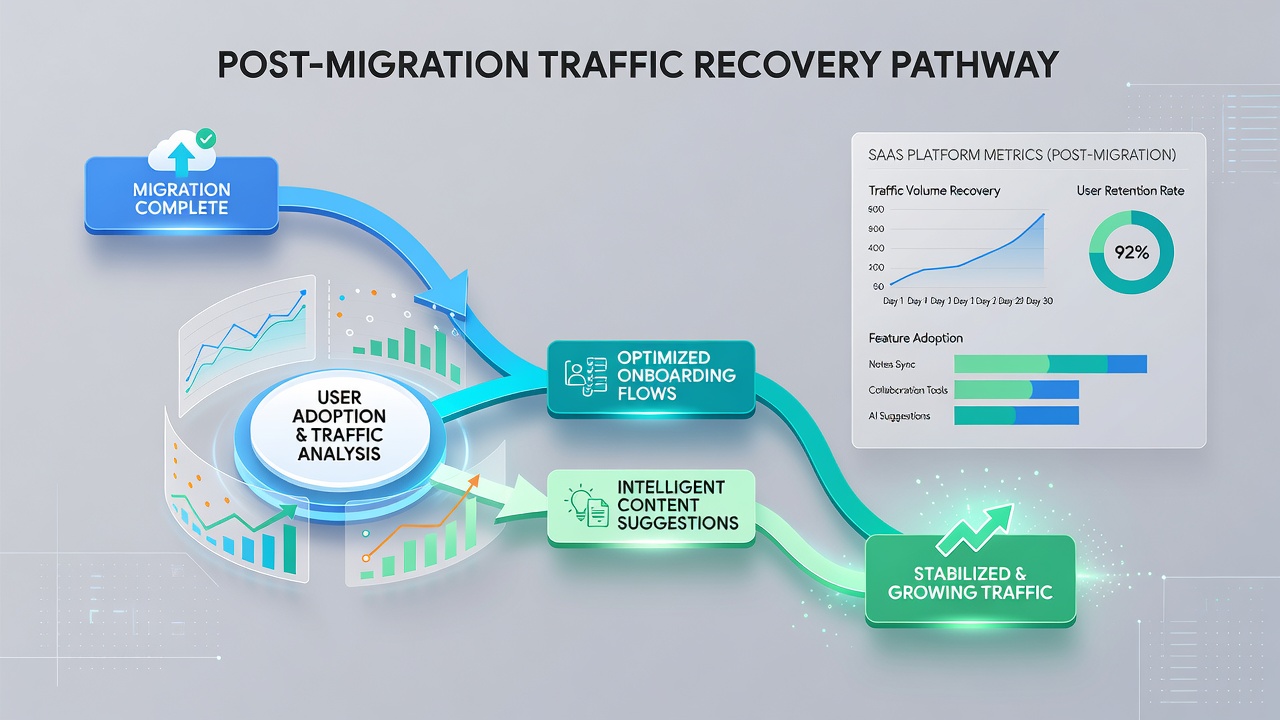
Continuous tracking through integrated dashboards reveals which note categories regain impressions first, allowing teams to prioritize recovery efforts on high-traffic templates such as meeting summaries or research outlines. Figures reveal that session duration metrics typically normalize once users re-establish habitual access patterns, yet bounce rates stay elevated until search result snippets accurately reflect relocated content. Platforms often integrate third-party tools that compare pre-migration and post-migration keyword rankings, highlighting opportunities to refresh meta descriptions for notes that previously drove substantial referral traffic.
What's interesting is how regional data protection rules influence these monitoring routines, particularly as September 2026 approaches and updated compliance frameworks in multiple jurisdictions require explicit consent logging for any stored user notes that appear in public search results. Organizations reference guidance from the National Institute of Standards and Technology when designing these logging systems to maintain both security and discoverability.
Content and User Experience Adjustments
Refreshing note templates with updated internal links and clear migration notices helps returning users locate familiar features without frustration, while new users receive onboarding flows that emphasize the platform's current domain. One study revealed that services adding contextual help text inside note editors experienced quicker restoration of daily active users compared with those relying solely on email announcements. Observers note that maintaining consistent branding across mobile and desktop clients prevents additional confusion that could otherwise extend recovery periods.
Another effective approach involves publishing migration timelines on dedicated status pages that link directly to updated help articles, which in turn earn backlinks from community forums and productivity blogs. Data from the European Commission's digital services monitoring indicates that transparent communication correlates with faster rebound in referral traffic for cloud-based productivity tools.
Long-Term Stabilization Measures
After initial recovery, platforms shift focus to strengthening domain authority through consistent publication of new note templates and integration with productivity ecosystems that drive external mentions. Regular audits of backlink profiles identify any lost citations that can be reclaimed through outreach to sites previously referencing the old domain. Those who've studied this process know that sustained attention to Core Web Vitals prevents secondary ranking fluctuations once traffic volumes return to pre-migration levels.
Conclusion
Successful navigation of post-migration traffic recovery in note-taking SaaS platforms depends on synchronized technical redirects, content updates, and ongoing analytics that together restore both search visibility and user engagement. Platforms that treat migration as an opportunity to audit and improve note organization often achieve more stable long-term performance than those viewing it as a purely administrative task.